 Машина для мытья овощей
Fresh-cut vegetables and frozen vegetables have become essential products for supermarkets, рестораны, food service companies, and food manufacturers worldwide. Consumers expect vegetables that are clean, безопасный, nutritious, and convenient while maintaining their natural color, текстура, и вкус. To meet these expectations, инвестирование в frozen vegetable processing plant with advanced automation is the most effective solution.
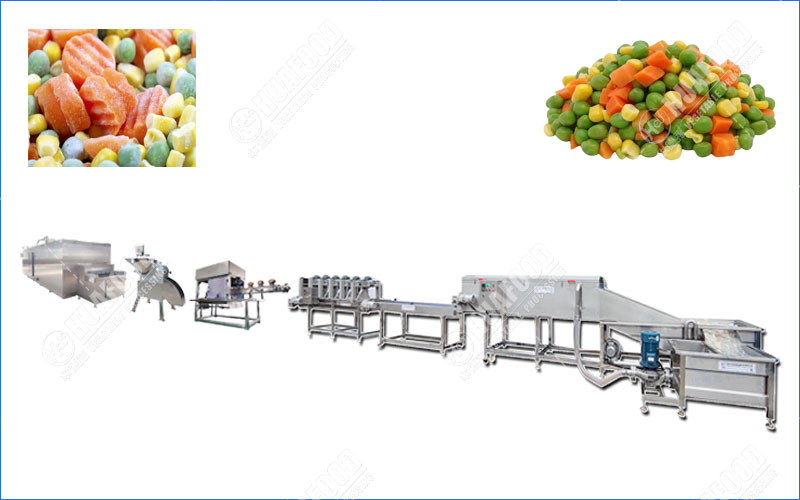
A modern frozen vegetable processing plant integrates washing, сортировка, резка, blanching, cooling, dewatering, замораживание, and packaging into one continuous production line. Every processing stage is carefully designed to preserve vegetable quality while maximizing production efficiency and reducing labor costs.
Why Choose a Frozen Vegetable Processing Plant?
A professional frozen vegetable processing plant is designed to process a wide variety of vegetables into fresh-cut or frozen products while maintaining consistent quality. Compared with manual processing, automated equipment delivers higher productivity, better food safety, and more uniform products.
Compared with traditional manual processing, a frozen vegetable processing plant offers several significant advantages:
Preserves Freshness and Nutrition
Advanced washing, blanching, and rapid freezing technologies help retain the natural color, текстура, flavor, vitamins, and minerals of vegetables, ensuring consumers receive products that are both nutritious and visually appealing.
Ensures Consistent Product Quality
Automated cutting, оценок, and conveying systems produce vegetables with uniform sizes and shapes, which improves freezing performance, packaging consistency, and overall product presentation.
Повышает безопасность пищевых продуктов
Конструкция из пищевой нержавеющей стали SUS304., hygienic equipment design, and automated processing minimize human contact and reduce the risk of cross-contamination, helping manufacturers comply with international food safety standards.
Increases Production Efficiency
A fully integrated frozen vegetable processing plant allows vegetables to move continuously from washing to packaging, significantly increasing production capacity while reducing bottlenecks and downtime.
Reduces Labor and Operating Costs
Automation replaces labor-intensive manual operations, lowering workforce requirements, improving operational efficiency, and reducing long-term production costs.
Supports a Wide Variety of Vegetables
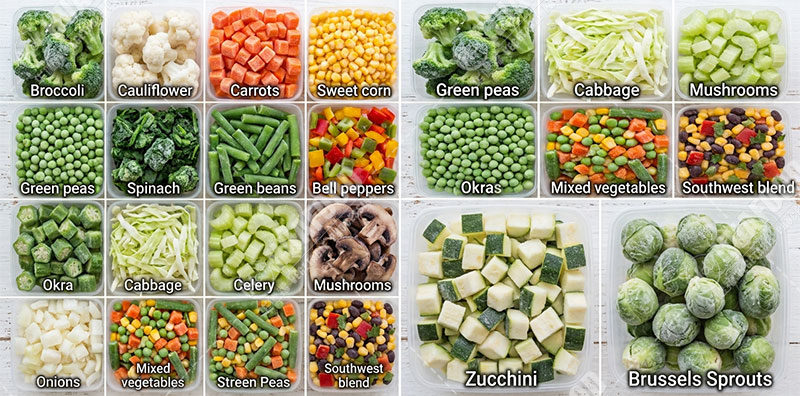
One frozen vegetable processing plant can process broccoli, морковь, цветная капуста, шпинат, зеленая фасоль, sweet corn, peas, лук, bell peppers, капуста, and many other vegetables by simply adjusting processing parameters or changing cutting tools.
Extends Shelf Life and Market Reach
Fresh-cut vegetables remain cleaner and fresher for refrigerated distribution, while IQF frozen vegetables can be stored and transported over long distances without significant quality loss, enabling processors to serve both domestic and international markets.
Whether producing ready-to-cook fresh-cut vegetables or IQF frozen vegetables, a complete frozen vegetable processing plant ensures every product meets commercial food processing standards.
Свежесрезанный & Frozen Vegetable Processing Features
Fresh-cut and frozen vegetables share many processing requirements but also have different quality objectives.
Fresh-Cut Vegetables
Fresh-cut vegetables require:
- Excellent cleanliness
- Attractive appearance
- Minimal tissue damage
- Low bacterial contamination
- Extended refrigerated shelf life
- Consistent cutting size
The processing line emphasizes gentle handling, эффективная промывка, precise cutting, and rapid drying to maintain freshness.
Frozen Vegetables
Frozen vegetables require:
- Uniform size before freezing
- Proper blanching
- Fast cooling
- Efficient water removal
- Rapid IQF freezing
- Stable packaging
A high-performance frozen vegetable processing plant protects vegetable color, текстура, vitamins, and flavor throughout the freezing process.
Complete Frozen Vegetable Processing Plant
Рабочий процесс
A commercial frozen vegetable processing plant normally consists of the following processing sections.
1. Raw Material Receiving
Fresh vegetables are delivered from farms and inspected before entering production.
Operators remove damaged vegetables, камни, листья, and foreign materials to ensure high-quality raw materials.
Proper raw material selection significantly improves the final product quality.
2. Система мытья пузыря
Cleaning is the first critical step in every frozen vegetable processing plant.
The bubble washing machine combines:
- Air bubble cleaning
- Опрыскивание высокого давления
- Циркуляция воды
- Optional ozone sterilization
This washing method effectively removes:
- Soil
- Sand
- Insects
- Pesticide residues
- Surface contaminants
Gentle water flow minimizes mechanical damage while improving hygiene.
3. Sorting and Inspection
После стирки, vegetables move to the inspection conveyor.
Workers or optical sorting systems remove:
- Broken vegetables
- Discolored products
- Rotten materials
- Foreign objects
Consistent raw materials improve processing efficiency and final product uniformity.
4. Cutting and Preparation
Different vegetables require different cutting methods.
The cutting equipment can produce:
- Cubes
- Dice
- Slices
- Strips
- Shreds
- Florets
Accurate cutting ensures uniform blanching and freezing while improving packaging appearance.
Modern cutters also reduce waste and increase raw material utilization.
5. Blanching
Blanching is one of the most important processes in a frozen vegetable processing plant.
The blanching machine uses hot water or steam to:
- Inactivate enzymes
- Preserve natural color
- Reduce microorganisms
- Improve freezing quality
- Maintain nutritional value
Different vegetables require different blanching temperatures and times for optimal results.
6. Rapid Cooling
Immediately after blanching, vegetables enter the cooling system.
Rapid cooling prevents overcooking while locking in freshness.
Cooling also prepares vegetables for efficient dewatering before freezing.
7. Dewatering
Surface moisture negatively affects freezing efficiency.
The dewatering machine removes excess water using centrifugal force or air drying technology.
Benefits include:
- Faster freezing
- Lower ice crystal formation
- Better product separation
- Improved packaging quality
Efficient dewatering is an essential part of every frozen vegetable processing plant.
8. IQF Freezing
Индивидуальная быстрая заморозка (IQF) is the core technology of a commercial frozen vegetable processing plant.
IQF offers several advantages:
- Individual pieces remain separated
- Better appearance
- Reduced nutrient loss
- Long storage life
- Excellent texture after cooking
Rapid freezing creates smaller ice crystals, helping vegetables retain their original structure.
9. Automatic Packaging
Frozen vegetables are automatically weighed and packaged.
Packaging options include:
- Pillow bags
- Stand-up pouches
- Vacuum bags
- Bulk cartons
Automatic packaging reduces labor while improving production efficiency and product consistency.
Automated Frozen Vegetable Processing Plant Advantages
Compared with conventional manual processing, an automated frozen vegetable processing plant offers numerous advantages.
Более высокая производительность
Continuous production enables large processing capacity with minimal downtime.
Better Food Safety
Food-grade stainless steel construction minimizes contamination while meeting international hygiene standards.
Consistent Product Quality
Automated controls maintain stable processing parameters, ensuring every batch has consistent size, цвет, и качество.
Lower Labor Costs
Automation significantly reduces manual operations while improving production efficiency.
Reduced Raw Material Waste
Precision cutting and optimized processing maximize vegetable utilization.
Энергоэффективность
Modern equipment incorporates energy-saving motors, insulated heating systems, and efficient refrigeration technologies to reduce operating costs.
Vegetables Suitable for Processing
One complete frozen vegetable processing plant can process numerous vegetable varieties, включая:
- Broccoli
- Cauliflower
- Морковь
- Sweet corn
- Green peas
- Spinach
- Green beans
- Bell peppers
- Okra
- Cabbage
- Celery
- Mushrooms
- Onions
- Mixed vegetables
The equipment can also be adjusted for seasonal vegetable production.
How to Choose the Right Frozen Vegetable Processing Plant
When selecting a frozen vegetable processing plant, buyers should evaluate several factors.
Production Capacity
Choose equipment that matches both current demand and future expansion plans.
Vegetable Variety
Different vegetables require customized washing, резка, blanching, and freezing configurations.
Automation Level
Fully automatic systems reduce labor requirements while increasing production consistency.
Food Safety Standards
Ensure all contact parts are manufactured from SUS304 stainless steel and comply with international food hygiene regulations.
Energy Consumption
Efficient equipment helps reduce electricity, вода, and steam consumption over long-term operation.
Послепродажная служба
Reliable technical support, installation guidance, обучение операторов, and spare parts availability ensure stable production throughout the equipment’s service life.
Why Invest in a Frozen Vegetable Processing Plant?
As global demand for convenient foods continues to grow, frozen vegetables have become one of the fastest-growing food categories. Рестораны, супермаркеты, meal-kit suppliers, and food processing companies increasingly require products with long shelf life, consistent quality, and high food safety standards.
A modern frozen vegetable processing plant enables manufacturers to increase production capacity, reduce operating costs, maintain product freshness, and improve overall profitability. With automated processing, businesses can supply premium fresh-cut and frozen vegetables while meeting the strict requirements of international markets.
Заключение
A well-designed frozen vegetable processing plant combines advanced washing, сортировка, резка, blanching, cooling, dewatering, IQF freezing, and automatic packaging into one efficient production system. By preserving the natural color, текстура, flavor, and nutritional value of vegetables, it helps food processors produce high-quality fresh-cut and frozen products while reducing labor costs, повышение безопасности пищевых продуктов, and increasing production efficiency.
If you found this guide helpful, we’d love to hear your thoughts. Оставьте комментарий ниже to share your experience or ask any questions about choosing the right frozen vegetable processing plant for your business. If you think this article can help others in the food processing industry, please share it with your colleagues or on social media. Your feedback and support encourage us to continue creating practical, professional content for global food manufacturers.